Bookkeeping for Nashville Concrete Contractors: Buying Guide

Updated: Nov 7
A busy concrete job can look profitable on paper while material, labor, equipment, and subcontractor costs tell a different story. For Nashville contractors, bookkeeping for concrete contractors Nashville TN should do more than sort transactions. It should help connect costs to jobs so you can see what each project is earning, even when scopes change and expenses arrive at different times.
Keeping that picture current can feel like one more job on your list. But without organized records, it’s difficult to assess a project’s financial position, and monthly totals may not answer the questions you need to make decisions. Contractor-focused bookkeeping brings structure to the numbers through consistent transaction recording, reconciliations, and useful financial reporting.
This guide explains what to look for in a bookkeeping approach for a concrete business, how monthly books can support job-cost insight, and why timely statements matter for active and completed projects. You’ll learn how to build a dependable financial foundation and distinguish basic recordkeeping from the project-level information that helps you review costs and make informed decisions.
Why Nashville Concrete Contractors Need Job-Level Bookkeeping
Revenue can make a month look strong while individual concrete jobs deliver very different results. One project may absorb extra labor or equipment time; another may require additional materials after a scope change. If the books show only broad expense totals, it’s difficult to see which jobs are driving costs and how they contribute to the business’s overall results.
Contractor bookkeeping organizes financial records so transactions can be understood in the context of business activity. For a concrete contractor, that means maintaining accurate books and using a consistent method to associate job-related transactions with the right project and cost category. Job costing gathers a project’s costs in one place so you can understand what the work required financially. This follows the core idea of job costing, which tracks costs associated with specific jobs.
What makes concrete contractor bookkeeping different?
Concrete work unfolds in stages. A job may involve material purchases before a pour, labor across multiple workdays, equipment use, and subcontractor invoices that arrive later. Scope adjustments add another layer: costs incurred after a change need to remain tied to the correct project for its financial picture to stay useful.
Consistent coding helps distinguish direct job costs, such as project labor and materials, from general overhead, such as office expenses and business insurance. Overhead still matters to the company’s financial health, but it shouldn’t be confused with costs assigned directly to a particular job. Using the same categories from project to project makes records easier to review and compare.
What Nashville-area owners need from their books
For owners managing crews, equipment, and upcoming work in the Nashville area, current financial information can support practical decisions. Monthly records may help you assess whether available cash supports a staffing decision, whether equipment spending fits the business’s financial position, and how active and completed work is affecting results. The books support decision-making, but they don’t guarantee a project will be profitable.
Useful insight depends on more than recording transactions. Bank reconciliations, general ledger maintenance, and monthly financial statements create a dependable financial foundation. Project-level tracking adds detail about individual jobs. Together, these records help owners review costs and financial performance with greater clarity.
Remote bookkeeping can give local contractors a recurring, organized workflow without requiring the owner to personally manage every entry and reconciliation. Okie Accounting Group LLC is based in Tennessee and works remotely with businesses nationwide, providing monthly bookkeeping for construction companies. For owners seeking bookkeeping for concrete contractors Nashville TN, the goal is to keep records current and structured so financial information is easier to use as the business moves from one job to the next.
How Concrete Job Costing Connects Materials, Labor, and Project Changes
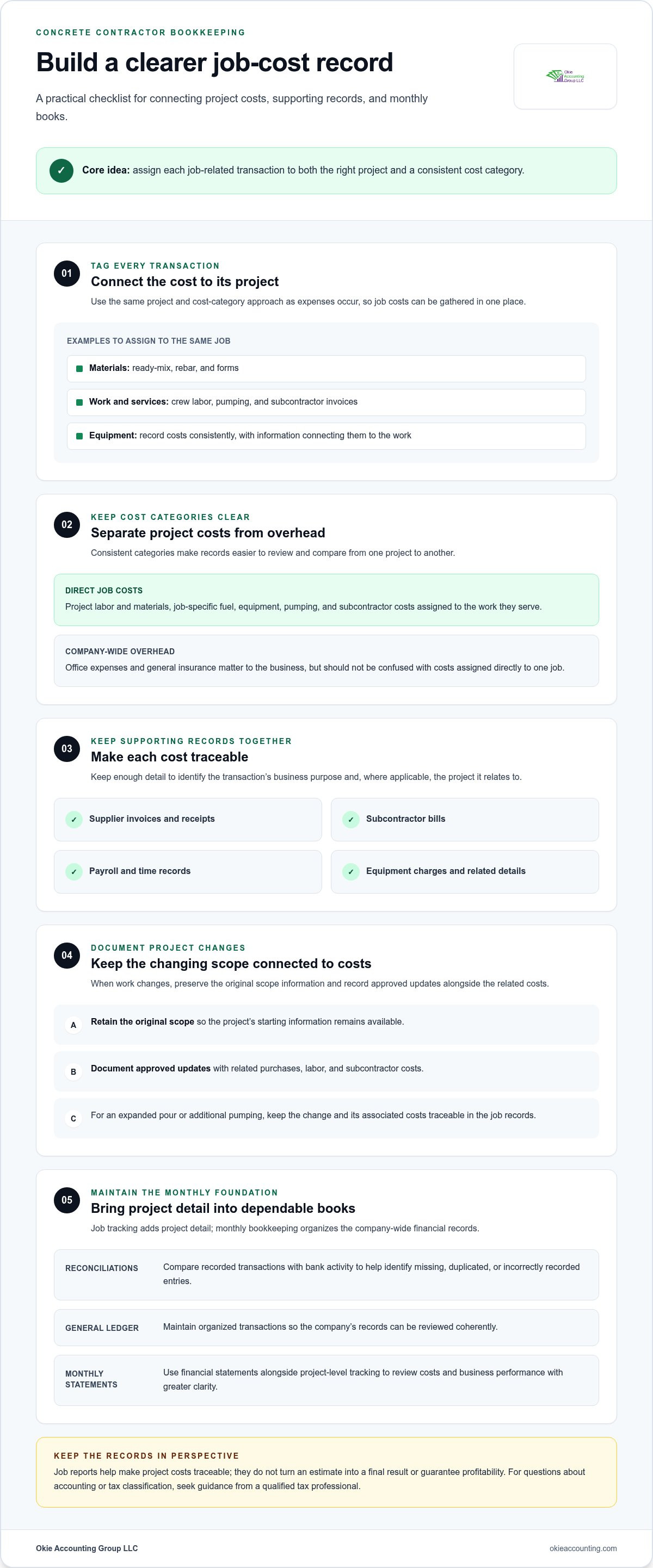
A job-costing system is useful only when transactions are assigned consistently to both a project and a cost category. For bookkeeping for concrete contractors Nashville TN, that might mean recording a ready-mix invoice under the correct job and materials category, then assigning crew labor, rebar, forms, pumping, and equipment costs to that same project as they occur.
Consistent categories and clear documentation turn individual expenses into a reliable record of what each project required. A supplier invoice, subcontractor bill, payroll record, or equipment charge should include enough detail to identify its business purpose and, where applicable, the job it relates to. The guide to construction accounting also explains why project-based tracking offers a more specialized view than broad expense totals alone.
Which concrete project costs should the books track?
Track direct costs against the project they serve. Depending on the work, these may include ready-mix, rebar, forms, pumping, job-specific fuel, subcontractor invoices, and labor. Record equipment costs consistently, with supporting information that helps show how they relate to the work. Office expenses and general insurance, by contrast, are typically company-wide overhead rather than costs tied to one pour.
Keep invoices, receipts, time records, and other supporting documents organized with the corresponding transactions. If you’re unsure about an accounting or tax classification, get guidance from a qualified tax professional rather than relying on job-cost categories to determine tax treatment.
How do job costing and monthly bookkeeping work together?
Job tracking adds project detail; monthly bookkeeping maintains the company-wide financial foundation. Reconciliations compare recorded transactions with bank activity, helping identify missing, duplicated, or incorrectly recorded entries. General ledger maintenance organizes those transactions so monthly financial statements reflect the business’s records coherently.
For project changes, preserve the original scope information and document approved updates alongside related purchases, labor, and subcontractor costs. If a pour expands or requires additional pumping, the supporting records should make the change and its associated costs traceable. That makes job reports more useful without treating an estimate as a final result.
Okie Accounting Group LLC provides construction-focused monthly bookkeeping, including transaction recording, bank reconciliations, general ledger maintenance, and monthly financial statements. To discuss how a more structured workflow could support your records and reporting, book a discovery call about your bookkeeping needs.
How to Compare Bookkeeping Support for Concrete Contractors
The right level of support depends on what you need the numbers to do. General bookkeeping organizes business transactions. Construction-focused bookkeeping adds project-level structure, while controller services provide higher-level financial oversight. For bookkeeping for concrete contractors Nashville TN, compare the work included and the decisions each level can help inform, not just the service label.
These distinctions describe typical scope, so agree on specific deliverables before work begins. A solo operator may first need organized transactions, reconciled accounts, and clear monthly statements. A growing team may benefit from payroll support and consistent project-cost records. A contractor managing multiple active jobs may need dependable monthly books alongside deeper review of financial patterns, budgets, or internal processes.
Which bookkeeping deliverables matter most?
Start with the foundation: consistent transaction recording, bank reconciliations, and general ledger maintenance. Standard monthly financial statements then provide a structured view of business performance rather than a collection of disconnected transactions. If you need help interpreting results for planning, management accounting support may be relevant.
When might a concrete contractor need controller support?
Controller-level oversight may be useful when you need help developing budgets, strengthening internal controls, or interpreting financial results beyond routine bookkeeping. Bookkeeping keeps records organized and current; fractional controller support adds higher-level review and financial oversight. Consider fractional controller services if your business needs that broader perspective. Match the support to your operating complexity, from sound records to more structured financial decisions.
What to Prepare Before Setting Up Concrete Contractor Bookkeeping
A clear starting point makes it easier to build bookkeeping around how your concrete business operates. Before setting up bookkeeping for concrete contractors Nashville TN, gather the records you have, note where information is missing, and identify what you want monthly reports to help you understand.
Which records help establish a reliable starting point?
Organize records by type and, where possible, by project. A complete file helps connect financial activity to business operations and gives the bookkeeping workflow a sound foundation.
1. Gather bank and credit-card statements. Include statements for business accounts, transaction records, bills, receipts, and customer payment information.
2. Collect project documentation. Group estimates, customer invoices, change orders, and subcontractor bills by job so project activity is easier to identify.
3. Assemble payroll information. Pull together payroll summaries and relevant labor records, including any existing method of associating labor with projects.
4. Share current accounting records. Include existing financial statements, general ledger reports, and the categories currently used to record transactions.
5. Describe the reporting you need. Identify pain points, such as unclear job costs, delayed reconciliations, or reports that don’t answer questions about active work. Specify which monthly financial information would be most useful.
Your records don’t need to be perfect before you begin. A list of missing documents or inconsistent categories can clarify what needs attention. Keep state or local tax questions separate from bookkeeping setup and raise them with a qualified tax professional; bookkeeping support is not tax preparation.
How can QuickBooks support a contractor's bookkeeping workflow?
Accounting software should be configured around the records and reports the business needs, not treated as a substitute for a clear process. Before setup, identify how you want to distinguish projects, organize cost categories, and review monthly results. Assess the software’s capabilities against those specific needs instead of assuming it will produce a particular report or workflow automatically.
Okie Accounting Group LLC offers QuickBooks setup and training to help establish an organized bookkeeping workflow. Based in Tennessee and working remotely with businesses nationwide, the firm also provides monthly bookkeeping for construction companies. To discuss your records, reporting needs, and current process, schedule a discovery call.
Bookkeeping for Concrete Contractors in Nashville, TN: A Clear Next Step
Choosing support comes down to the clarity you need and the complexity of your operation. Look for records organized around your business activity, reconciliations that keep accounts current, reports you can use to review performance, and an appropriate level of financial oversight. For bookkeeping for concrete contractors Nashville TN, distinguish dependable monthly bookkeeping from project-level cost tracking, which adds detail about how expenses relate to individual jobs.
What working with a construction-focused bookkeeping team can support
Okie Accounting Group LLC provides monthly bookkeeping for construction companies, including transaction recording, bank reconciliations, general ledger maintenance, and standard monthly financial statements. These recurring tasks create a more dependable view of business finances. With current, organized records, owners can review financial results and use them to inform decisions about costs, staffing, equipment, and upcoming work. Bookkeeping supports informed decisions, but it doesn’t guarantee a project will be profitable.
Additional services address different needs. Payroll management supports payroll workflows; cash flow forecasting helps with forward-looking planning; and fractional controller services provide higher-level financial oversight. Identify the immediate need rather than treating every service as part of basic bookkeeping.
How to take the next step
A discovery conversation is a chance to explain your project mix, how you currently record transactions, and which financial questions your existing reports leave unanswered. Discuss the records and workflow you have in place, along with the reporting or oversight you want. The goal is to clarify what a useful bookkeeping process should support, since contractors don’t all need the same setup.
Okie Accounting Group LLC is based in Tennessee and works remotely with businesses nationwide, including contractors in the Nashville area. The firm also serves businesses in Jacksonville, Florida. To discuss your current records and the financial clarity you want, schedule a discovery call.
Build a Clearer Financial Picture for Your Next Job
Strong contractor bookkeeping connects project costs to the work they belong to while keeping company-wide records organized. Consistent cost categories can help you understand how materials, labor, equipment, and subcontractors affect individual jobs. Reconciled books and useful monthly financial statements provide a broader view of business performance and support informed decisions.
For bookkeeping for concrete contractors Nashville TN, choose support that fits your workflow, reporting needs, and level of oversight. Okie Accounting Group provides construction-focused monthly bookkeeping, including transaction recording, bank reconciliations, general ledger maintenance, and standard monthly financial statements. When your needs extend beyond ongoing bookkeeping, fractional controller services add higher-level financial oversight. Based in Tennessee, the firm works remotely with businesses nationwide, including in Jacksonville, Florida, and supports contractors seeking a more organized financial foundation.
Bring your questions about current records, project tracking, and the reports you want to use. A discovery call is an opportunity to discuss your bookkeeping needs and goals. Schedule a discovery call about your bookkeeping needs to take a practical step toward clearer financial information for the work ahead.
Frequently Asked Questions
How does bookkeeping for concrete contractors differ from general small-business bookkeeping?
Construction bookkeeping organizes financial records around both the company and its individual projects. A concrete contractor may need ready-mix, labor, equipment, pumping, and subcontractor bills associated with the right job, while general overhead stays separate. Staged work, scope updates, and invoices arriving at different times make consistent records especially useful. This structure helps owners review project costs alongside reconciled business accounts and monthly financial statements.
Can QuickBooks track costs for individual concrete projects?
QuickBooks can support project-level tracking when its setup and workflow capture the information a contractor needs. The process may involve assigning transactions to projects and using consistent cost categories, with invoices and other records supporting the entries. Capabilities depend on the QuickBooks version and configuration, so don’t assume a particular feature or integration. QuickBooks setup and training can help align the workflow with reporting needs.
What records should a concrete contractor keep for job costing?
Keep business bank and credit-card statements, transaction records, supplier bills, receipts, and customer payment records. For each project, organize estimates, customer invoices, scope updates or change orders, and subcontractor documentation. Payroll summaries and labor records can support labor tracking, while equipment and job-related fuel records provide further context where relevant. Clear documentation makes it easier to associate financial activity with a project and review its costs.
How often should a concrete contractor reconcile business accounts?
Reconcile business bank and credit-card accounts monthly as part of a consistent bookkeeping close. Comparing recorded transactions with account statements can help identify missing, duplicated, or incorrectly entered activity before it carries into later reports. A regular monthly process also supports current financial statements. If transactions are delayed or accounts have fallen behind, organize the records and work through the unreconciled periods so the books provide a dependable starting point.
Can outsourced bookkeeping help identify which concrete jobs are profitable?
Outsourced bookkeeping can make job performance easier to assess when project revenue and related costs are recorded consistently. Assigning labor, materials, equipment, and subcontractor costs to the appropriate jobs gives owners a clearer basis for reviewing results. Reconciled books and monthly reporting support that analysis, but bookkeeping alone doesn’t guarantee project profitability. The usefulness of the picture depends on complete records and timely documentation of project activity and changes.
Does bookkeeping for concrete contractors include payroll management?
Payroll management can be provided alongside monthly bookkeeping, but it’s a distinct service rather than an automatic part of every bookkeeping arrangement. Payroll records can also inform job-cost reporting when labor is tracked consistently and associated with the appropriate projects. Clarify which payroll tasks you need and how payroll information will fit into your bookkeeping workflow. Okie Accounting Group offers both monthly bookkeeping and payroll management.
Can a Tennessee-based bookkeeping firm work remotely with a Nashville contractor?
Yes. A Tennessee-based firm can support a Nashville contractor remotely through an organized financial workflow. Okie Accounting Group works remotely with businesses nationwide, providing construction-focused bookkeeping and related financial support. The firm also serves businesses in Jacksonville, Florida. Remote support includes monthly transaction recording, bank reconciliations, general ledger maintenance, and standard monthly financial statements, helping contractors maintain organized records without an in-person bookkeeping arrangement.


Comments