QuickBooks for Roofing: 2026 Profitability Guide

Updated: 6 days ago
Most roofing contractors use QuickBooks as a digital shoebox for receipts, but treating your accounting software as a mere administrative chore is the fastest way to leak profit on every square you lay. You likely understand the frustration of finishing a major tear-off only to realize that unallocated labor and material waste swallowed your projected margin. Managing the complex dance of insurance claim supplements and customer deposits shouldn't feel like a guessing game. If your financial reports make scaling feel risky, you're missing the structural framework needed for true oversight.
This guide will show you how to transform QuickBooks for roofing contractors from a basic ledger into a strategic engine for profitability and job costing accuracy. By moving beyond simple data entry, you'll gain real-time visibility into project-specific margins and streamline payroll for your crews. We'll walk through the methodology of building a disciplined financial system that produces lender-ready statements, moving your business from a state of operational complexity to one of total clarity. You'll learn how to protect your profits and establish the financial readiness required to scale from a local crew to a dominant market force.
Why Generic QuickBooks Setups Fail Roofing Contractors
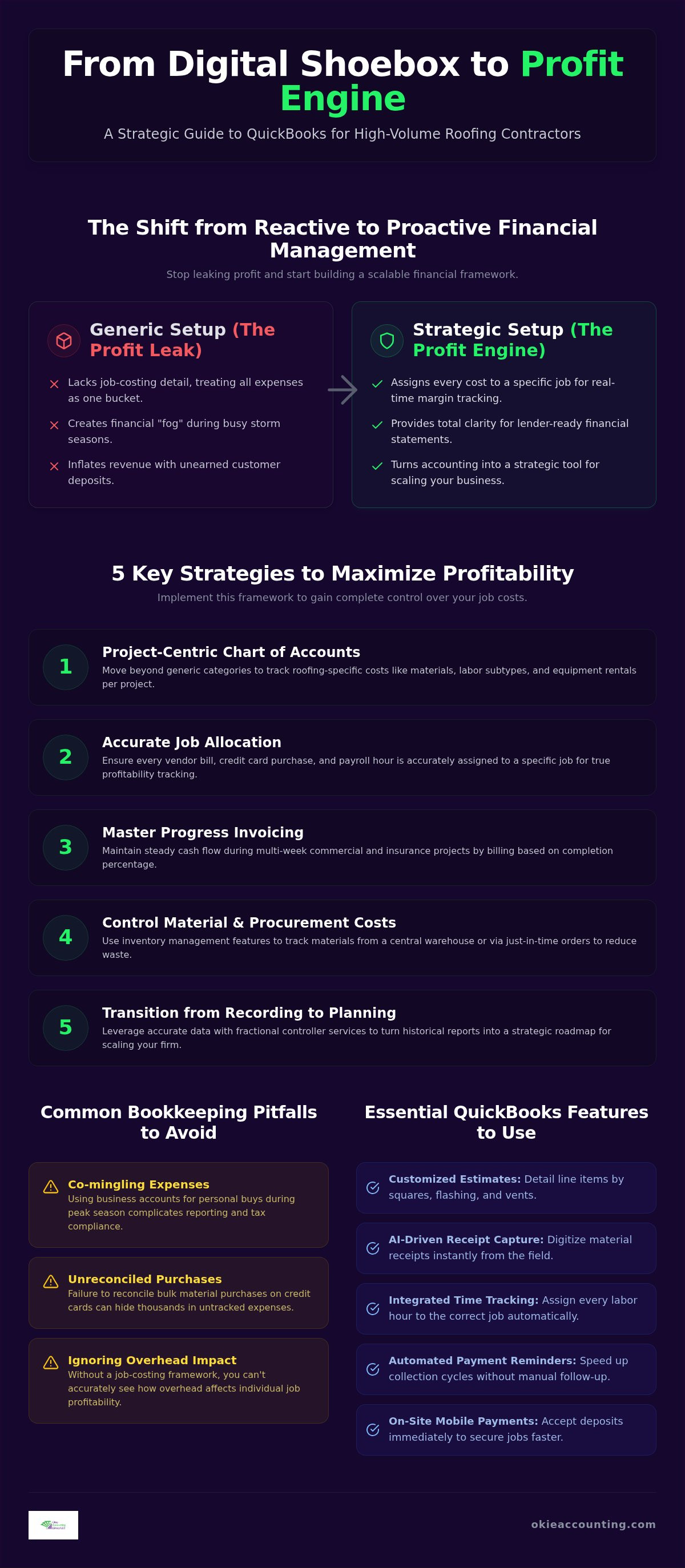
Standard "Service Industry" templates in QuickBooks are built for simple transactions, not the multi-layered financial demands of a construction firm. Using a generic Chart of Accounts means you lose the ability to track "profit leaks" in material procurement and labor. A generic setup might tell you how much you spent on "Supplies"; it won't tell you if a specific crew is wasting 10% of the shingles on every job. Moving beyond basic data entry is essential for 2026 firms that want to stay competitive. Implementing QuickBooks for roofing contractors correctly requires a structural shift from reactive bookkeeping to proactive financial management.
The Complexity of Roofing Revenue Cycles
Roofing cash flow is rarely linear. Managing the gap between insurance claim approvals and final RCV (Replacement Cost Value) payments requires a specialized approach. If you aren't careful, customer deposits can inflate your revenue figures prematurely. This makes the business look healthier than it is. Proper QuickBooks Setup & Training ensures these deposits sit on the balance sheet as a liability until the work is earned. Calculating sales commissions on actual job profitability rather than total contract value protects your bottom line from unexpected cost overruns.
Common Bookkeeping Pitfalls in the Roofing Industry
High-volume storm seasons often lead to financial fog where discipline slips. Co-mingling personal and business expenses during these peaks is a common error that complicates year-end reporting. Failure to reconcile credit card statements used for bulk material purchases can hide thousands in untracked expenses. Without a project-centric framework, you might ignore the impact of overhead on individual job margin calculations. Using QuickBooks for roofing contractors effectively means every dollar spent is tied to a specific project. This level of oversight turns your accounting from a historical record into a strategic tool for profit protection.
Essential QuickBooks Features for High-Volume Roofing Firms
Managing a high-volume roofing firm requires more than just tracking money in and money out. It demands a level of granularity that general service templates simply cannot provide. To maintain control, you must customize your estimates and proposals to reflect roofing-specific line items. Instead of generic descriptions, use units like squares, linear feet of flashing, and specific vent counts. This transparency builds trust with your customers and provides the data points needed for precise job costing later in the project lifecycle.
For commercial projects that span several weeks, progress invoicing is a critical tool for maintaining steady cash flow. You shouldn't wait until the final cap is installed to receive payment. By billing based on completion percentages, you ensure that material costs and crew payroll are covered in real-time. In the 2026 technological environment, leveraging AI-driven receipt capture is no longer optional. Field supervisors can now use mobile devices to snap photos of material receipts, allowing the software to categorize expenses instantly and eliminate the traditional paper-trail headaches of the construction industry.
Integrating time-tracking directly into QuickBooks for roofing contractors ensures that every labor hour is assigned to the correct job site. This is the foundation of accurate project-based financial tracking. When labor costs are synced automatically, you gain immediate visibility into whether a project is trending over budget before it's too late to course-correct.
Advanced Invoicing and Payment Collection
Speeding up the collection cycle is vital for liquidity. Setting up automated payment reminders ensures that residential customers stay on schedule without requiring manual follow-ups from your office staff. With QuickBooks Payments, your teams can accept deposits on-site via mobile devices, securing the job while the lead is still fresh. If your firm operates across state lines, configuring sales tax rules for multiple jurisdictions is essential to prevent costly compliance errors.
Strategic Software Training for Your Team
Software is only as effective as the people operating it. Professional QuickBooks training for contractors is a prerequisite for maintaining data integrity across a growing organization. You should train your field supervisors to use mobile features for real-time material logging and time entry. Establishing a monthly review cadence ensures your systems remain optimized and your reports stay accurate. If you're unsure if your current setup is built for scale, you can schedule a discovery call to review your financial framework.
Implementing Accurate Job Costing for Roofing Projects
Job costing isn't just about recording what you spent. It's about building a structural framework that protects your profit margins on every single roof. To transform QuickBooks for roofing contractors into a strategic engine, you must follow a disciplined implementation process. This starts with establishing a project-centric Chart of Accounts that categorizes costs by job phase rather than generic expense types. Once this foundation is laid, you can move through the following critical steps:
Assigning Costs: Every vendor bill and payroll hour must be tagged to a specific Job or Customer in real-time.
Allocating Indirects: Distribute "hidden" costs like insurance, fuel, and warehouse rent across active projects to see your true net margin.
Weekly Reporting: Run profitability reports every Friday to identify labor overruns or material waste before the project closes.
Post-Job Review: Compare actual costs against your original estimates to refine your bidding strategy for the next contract.
This systematic approach ensures that you aren't just guessing at your success. It moves your firm from reactive data entry to proactive financial oversight.
Tracking Labor and Subcontractor Costs
Distinguishing between W2 labor and 1099 subcontractor payments in your ledger is vital for both tax compliance and operational clarity. If you don't track these categories correctly, your Workers Comp audits will become a painful and expensive ordeal. Linking your payroll data directly to job costs allows for a 100% accurate P&L. This level of detail ensures that your sales commissions are based on the actual profit remaining after the crew is paid, not just the gross contract value.
The Role of Work in Progress (WIP) Accounting
Roofers often face tax surprises because they recognize revenue when the check hits the bank rather than when the work is performed. Understanding WIP accounting for construction is the only way to avoid these pitfalls. By recognizing revenue based on project completion percentage, you align your income with the actual expenses incurred. WIP reports are also essential for proving your financial stability to lenders and bonding companies. They show that your firm is managed with the professional discipline required for high-stakes commercial contracts and long-term business growth.
Managing Roofing Inventory and Material Procurement
Roofing materials represent the largest variable cost in your business. Managing these effectively requires a strategic choice between "Just-in-Time" procurement and maintaining a central warehouse. Most general bookkeeping advice fails to address the unique mechanics of the roofing supply chain. For firms using QuickBooks for roofing contractors, the software provides specialized tools to handle these complexities without overcomplicating your daily operations.
If you maintain a warehouse, QuickBooks Enterprise offers advanced inventory tracking for high-value materials like metal panels and specialized underlayment. However, you don't need to track every single nail. Implementing a "Non-Inventory Part" strategy for common consumables simplifies your bookkeeping while ensuring job costs remain accurate. This prevents your ledger from becoming cluttered with thousands of tiny line items that don't impact your strategic decision-making. It ensures your team focuses on the data that actually moves the needle on profitability.
Reconciling supplier credits is another area where profit often leaks. When your crew returns unused shingle bundles or metal trim, those credits must be tracked back to the specific job. This discipline ensures your project profitability reports reflect the actual material consumed, not just the initial purchase. Without this step, your job costing data becomes skewed, leading to inaccurate bidding on future contracts.
Optimizing the Supply Chain Workflow
Setting up preferred vendors within your system allows you to track price fluctuations in real-time. This is vital when material costs are volatile. Using Purchase Orders (POs) establishes a disciplined way to lock in pricing and ensure delivery accuracy. By auditing supplier invoices against delivery slips, you prevent overbilling and ensure you only pay for what actually arrived at the job site. This level of oversight protects your margins from administrative errors at the supply house.
Inventory Accuracy for Tax Readiness
Your inventory levels directly impact your bottom line and tax liability. Conducting year-end physical counts to adjust your records ensures your financial statements are accurate for lenders and tax authorities. Professional management accounting provides the structural framework needed to handle these inventory-heavy cycles without losing control of your cash flow. If your material tracking feels disorganized, you can book a discovery call to audit your procurement workflow and regain financial clarity.
Scaling Your Roofing Firm with Fractional Controller Oversight
Many roofing owners confuse basic bookkeeping with financial leadership. While a bookkeeper records the past, a fractional controller plans the future. This distinction is critical when you move from managing a single crew to overseeing a multi-state operation. By leveraging QuickBooks for roofing contractors as a data engine, a controller performs sophisticated cash flow forecasting and "what-if" scenario planning. They help you determine if you can afford that new fleet of trucks or if a shift in material pricing requires an immediate adjustment to your bidding model.
Strategic oversight also includes the implementation of rigorous internal controls. High-volume construction businesses are often vulnerable to fraud or administrative leakage. A controller establishes the structural frameworks needed to protect your assets. This moves your firm away from "gut-feeling" decisions and toward a culture of data-driven strategic growth. You stop reacting to the bank balance and start proactively managing your capital. This proactive stance provides the quiet confidence you need to take on larger, more complex projects without risking the company's stability.
The Strategic Advantage of Professional Oversight
Professional oversight allows you to identify your true profit drivers. You might find that small-scale repairs offer higher margins than full replacements once you account for labor intensity and material waste. Preparing lender-ready financial statements is another core benefit. When you need to secure equipment financing or a line of credit for a large commercial project, having organized, professional reports is non-negotiable. Discover our controller services to see how we build the financial stability required for scaling.
Your Next Steps Toward Financial Clarity
You can't build a skyscraper on a cracked foundation. A professional QuickBooks cleanup is often the first step before attempting to scale. This process removes the clutter from previous years and ensures your QuickBooks for roofing contractors setup is optimized for the 2026 market. From there, we create a roadmap for financial readiness and long-term profit protection. This structured approach ensures that every square you lay contributes to a healthy, sustainable bottom line. It's time to move from being a service provider to a strategic partner in your own firm's success. Book a discovery call with Sarah OQuinn to secure your roofing firm’s financial future.
Securing Your Firm's Financial Foundation
Transforming your accounting from a historical record into a strategic asset is the most significant move you can make for your company's longevity. You've seen how a project-centric setup eliminates profit leaks and how disciplined inventory management protects your cash flow. By implementing QuickBooks for roofing contractors as a comprehensive structural framework, you allow your data to drive growth rather than just document expenses. This shift from administrative tasks to strategic oversight ensures your business is built on a foundation of accuracy and control.
Okie Accounting Group LLC, led by construction accounting expert Sarah OQuinn, provides the specialized guidance needed to navigate these industry-specific complexities. Our cloud-based systems offer nationwide remote support, ensuring you have a proactive partner regardless of your service area. We focus on building the financial readiness required for long-term stability and profit protection. It's time to stop guessing at your margins and start scaling with confidence. Schedule Your Discovery Call for Specialized Roofing Bookkeeping today to secure your firm's future. Your path to operational clarity starts with a single, data-driven choice.
Frequently Asked Questions
Is QuickBooks Online or Desktop better for roofing contractors?
QuickBooks Online is the superior choice for modern firms because it provides real-time field access and integrates seamlessly with roofing-specific CRMs. While Desktop once held the lead in job costing depth, the 2026 cloud features now offer the mobility required for multi-crew management. Online's accessibility ensures field supervisors can log receipts immediately, which is the foundation of a disciplined QuickBooks for roofing contractors setup.
How do I track roofing materials inventory in QuickBooks without it becoming a mess?
Implement a "Non-Inventory Part" strategy for consumables like nails and flashing to keep your ledger clean. You should only reserve formal inventory tracking for high-value items like metal panels or bulk shingle orders stored in a central warehouse. This balanced approach prevents administrative bloat while ensuring significant material costs are still captured in your job costing reports for accurate profit protection.
Can QuickBooks handle insurance claim payments and depreciation for roofing jobs?
QuickBooks handles these by using "Other Current Liability" accounts for initial deposits and supplements until the work is fully earned. You must record the Replacement Cost Value and Actual Cash Value carefully to ensure your final invoice aligns with the insurance carrier's scope. This discipline prevents premature revenue inflation and ensures sales commissions are calculated based on actual collected funds rather than projected totals.
What is the best way to pay roofing subcontractors through QuickBooks?
Pay subcontractors through the Vendors module and ensure every payment is linked to a specific Customer:Job for accurate costing. You should always require a W-9 and certificate of insurance before issuing funds to ensure a painless Workers Comp audit. Using integrated payment tools streamlines this process while maintaining the rigid paper trail required for tax compliance and project-based financial tracking.
How do I set up a roofing-specific Chart of Accounts?
Your Chart of Accounts must be project-centric, featuring specific sub-accounts for cost codes like tear-off labor, shingles, and disposal fees. Avoid generic service categories that hide your true production costs and leak profit. This structural framework allows you to see exactly where capital is deployed on every roof, transforming QuickBooks for roofing contractors into a strategic engine for business growth.
Can I integrate my roofing CRM like JobNimbus or AccuLynx with QuickBooks?
Integrating your CRM with QuickBooks is essential for eliminating double data entry and maintaining data integrity. These integrations allow project estimates and customer details to flow directly into your accounting software. This ensures your production team and finance team work from the same data, which is a hallmark of a mature, scalable roofing operation focused on long-term stability.
What reports should a roofing company owner review in QuickBooks every week?
Review the Job Profitability Detail and Unpaid Bills by Job reports every Friday to maintain tight control over your project margins. You should also examine your Accounts Receivable Aging to ensure insurance supplements aren't sitting unpaid for months. These reports provide the real-time visibility needed to make data-driven choices rather than relying on the current balance in your checking account.


Comments